How to Write a Good Podcast Description (7 Essential Tips!)
Writing a good podcast description or summary is like writing a blurb for a book. You want to sell the show to your potential listeners and encourage them to give you a shot.
In this article, we’re going to find out how to do just that. First up, though…
Podcast Description Vs Podcast Episode Description: What’s the Difference?
Let’s clear up any potential confusion surrounding the term.
Some folks refer to single podcast episodes as “podcasts”, but “a podcast” is really the show as a whole.
So a “podcast description” wouldn’t be the text that accompanies one single episode – that’s what’s known as “show notes“.
And now that we’re definitely on the same page, let’s move on to where to write that description.
How to Write a Podcast Description: Where Does It Go?
Your podcast description is written inside your podcast hosting account – the place your show essentially “lives”.
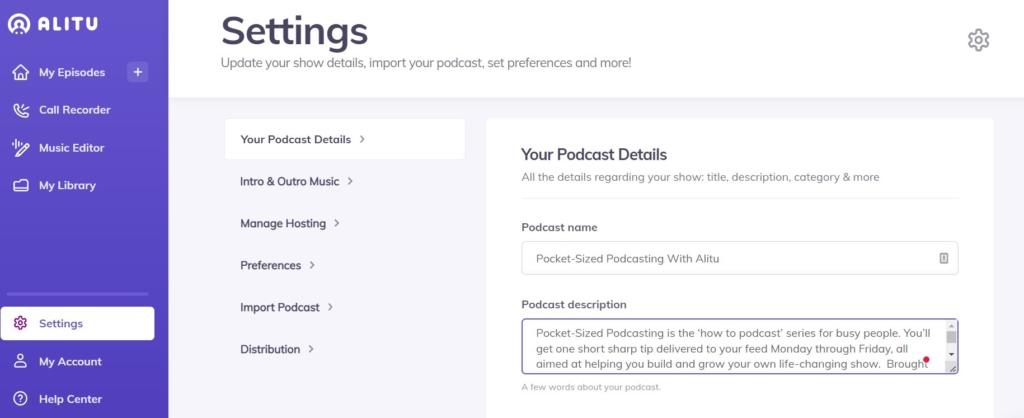
That’ll be done when a podcaster creates their show before submitting it to the listening directories – those apps and platforms where people will find and follow it.
Unfortunately, many (and I’ve done this too!) write their podcast description as an afterthought. They stumble across a big empty text box and need to stick something in there. However, tasks like uploading their artwork and the first episode seem to be the biggest priority.
Overlook podcast descriptions at your peril, though. It’s a mistake to just quickly type something in and leave it at that.
That said, the good news is that you can edit your show summary at any time. When you update any detail inside your podcast hosting account, the changes will usually appear in all podcast directories within a few hours.
Why Is Your Podcast Description So Important?
In our 2024 Podcast Discovery Survey, we asked listeners, “When considering a new show, how important to you is…”, followed by various front-facing aspects of a podcast.
They were then asked to grade each one out of five, with five being really important, and zero being not important at all.
As you’ll see from the data in the graph, the podcast description came out on top, above even things like episode titles and frequency of new episodes.

What’s more, we ran a similar survey in 2019 and ‘podcast description’ came out on top in this question, too. So it’s beyond doubt that this is something worth paying attention to!
Is Your Podcast Description Important for Search?
It certainly can be. SEO, AEO, GEO, LLMO or whatever new term we’re using today isn’t reason alone to write a good podcast description. But it’s only going to improve your chances of showing up in any search for content on your topic.
As for apps and listening platforms, many still only search podcast names and episode titles. This will undoubtedly evolve as AI search becomes easier to integrate. But for now, your podcast description does its job once the potential listener has already found your show, but before they hit play.
6 Podcast Description Tips: How to Write a Podcast Summary
Now that we know why podcast descriptions are important and how they work, how do you write a good one? Here are our top podcast description tips.
1. What Goes In?
Again, start by thinking of it as the text on the back of a book you’ve picked up and are thinking about buying.
Or, if you’re not much of a reader, the text on the back of a video game box. Or the summary of a show on Netflix.
In fact, it’ll be helpful to look at some of these and pick through the way they’re written. Are there common themes, structures, or tones?
Try reading some descriptions in your podcast listening app, too – though this can be more hit or miss because most podcasts don’t go through a publishing process in the way books, TV shows, and video games do.
Alright, how about the things you might want to consider putting in your own podcast summary?
2. Who Is It For?
Who’s your target audience? Speak directly to them in your podcast description. Let them know that this is the podcast for them.
To do this, you need to tell them who they are. This sounds strange, but it works.
“You’re desperate to learn Spanish but only have 10 minutes daily to practice”.
Those who can relate to this statement already feel like you’ve created this show just for them. And for those who disagree, well, they’re not your potential audience…
3. What Will They Get From It?
Are you going to teach them something? Help them solve a problem or struggle? Will you be motivating, encouraging or inspiring them? Or maybe you’ll be offering to entertain them and make them laugh? Whatever they’re going to get from your podcast, tell them about it upfront.
4. Who Are You?
You don’t need to be famous or well-known to run a successful podcast. In fact, our discovery survey data shows that most listeners don’t care if they’ve never heard of you.
That said, you still want to let listeners know who they’ll be listening to. So, write a bit about yourself. If you’re a qualified expert on your topic, then great. If not, let them know you’re on a learning journey, just like they are. In this case, the show’s aim will be for the presenter and the listener to learn together.
5. What Can They Expect?
Will it be interviews? Will you be talking with a co-host? Or flying solo?
Do you release new episodes on the same day every week, or do you podcast in seasons?
Some info here will help set expectations with your potential listeners.
6. How Long Should My Podcast Description Be?
This is a bit like the question, “How long should my podcast episodes be?” – there’s no ideal length. Your show summary should be as long as it needs to be to get the message across.
But you should aim to be succinct without leaving out any good stuff.
Our media hosting pals at Captivate have a 4000-character limit in this field. Honestly, you’d need to have a very good reason to go anywhere near that. Just because you write a huge summary for your show doesn’t mean anyone will read it.
Here are some excellent examples of podcast descriptions by a few successful shows. The longest one is under 680 characters and still manages to say a lot.
7. DON’T Let AI Write It For You
AI tools like ChatGPT and Claude offer a way to generate text in seconds. There’s no doubt that AI tools can help support podcasters and do some of the heavy lifting or less enjoyable tasks for them. But writing your podcast description is an important one-off step, rather than an arduous long-term commitment.
If you plan to invest time into launching and growing a podcast, but feel you’ve no time or no creative spark to even write your description, then it could be time to rethink whether a podcast is a good fit for you right now.
Writing your description is more than just text generation. It helps you solidify your goals, commitments, and value offerings. In my opinion, it’s an essential creative exercise in the podcast planning process.
By all means, info dump everything into an LLM and get a few draft examples to help you structure your thoughts. But I’d still encourage you to write it in your own words afterwards.
When you’re behind the mic, having an in-depth conversation, AI won’t be there to help you. So keep that grey matter fit and think of writing as a gym session for your brain.
Great Podcast Description Examples
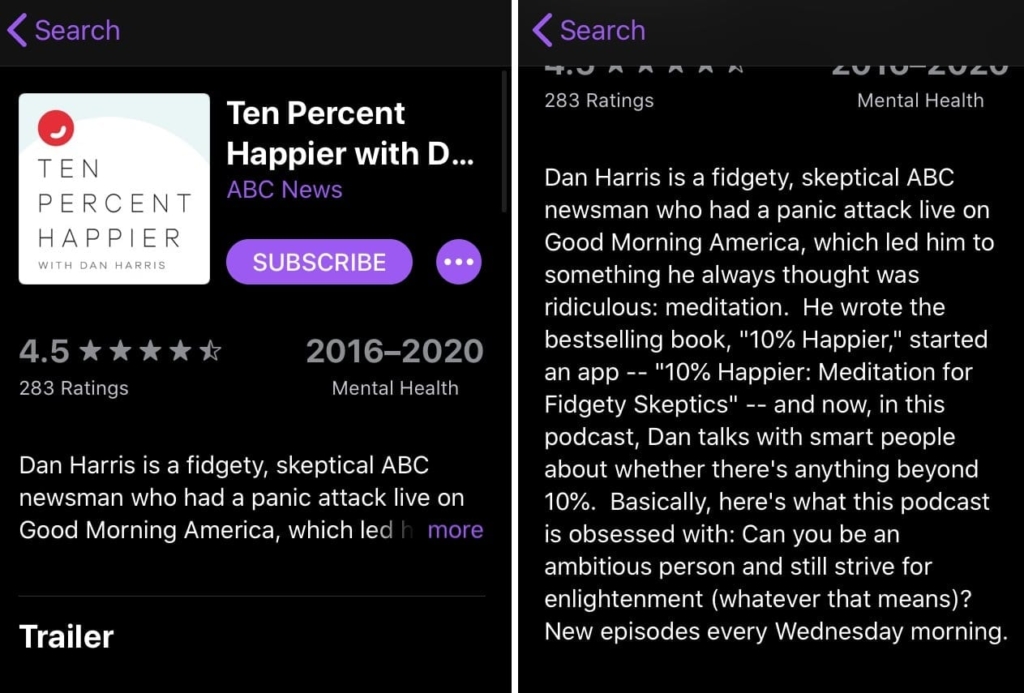
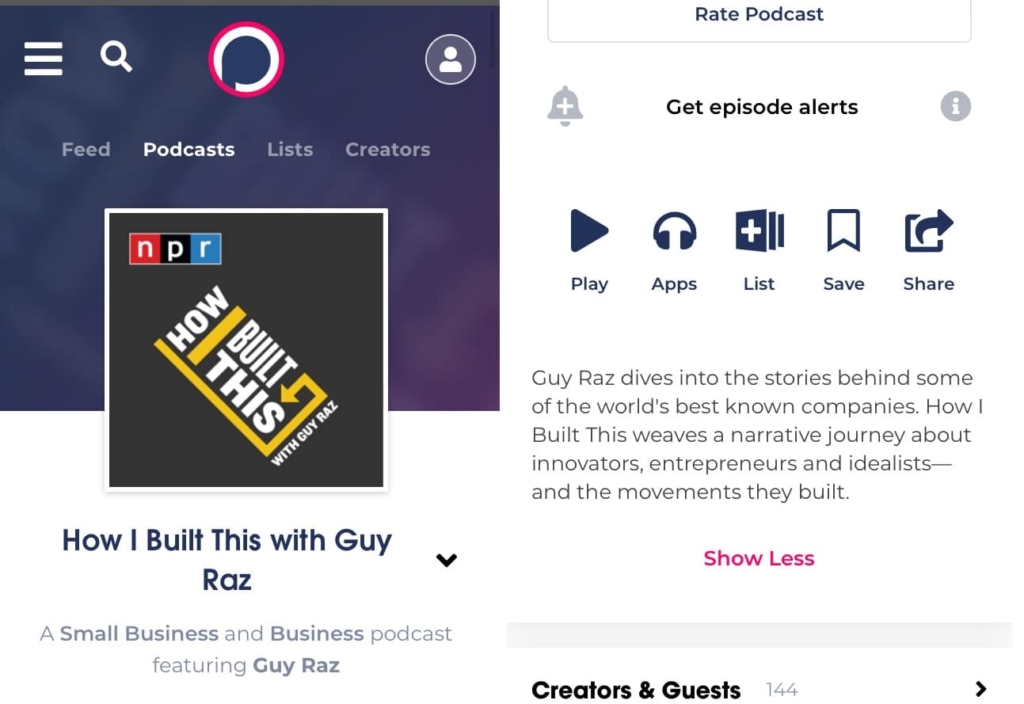
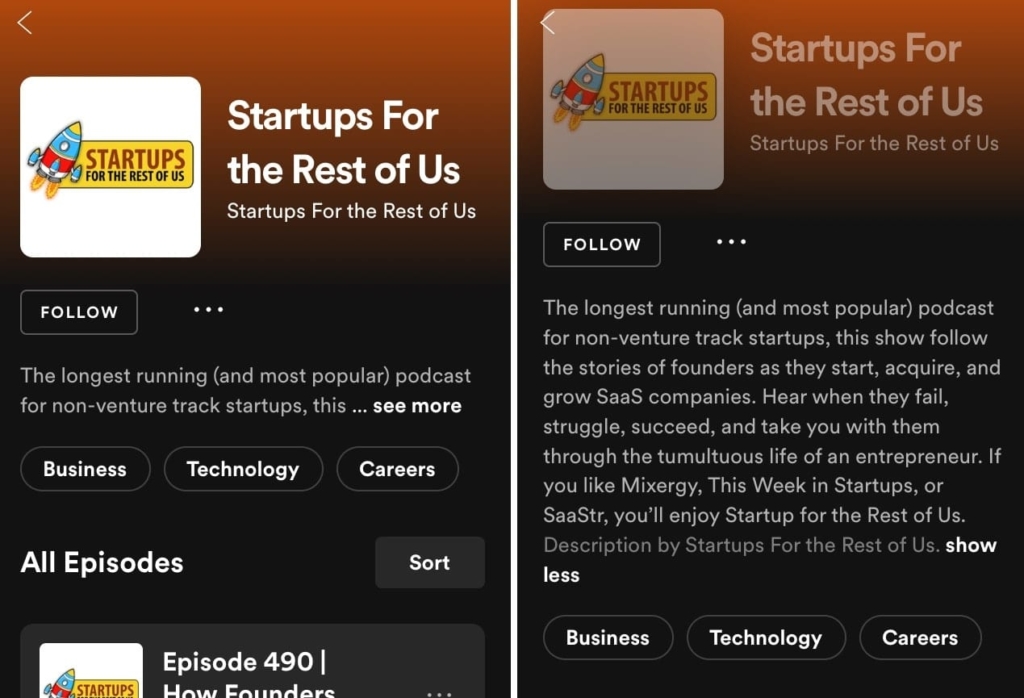
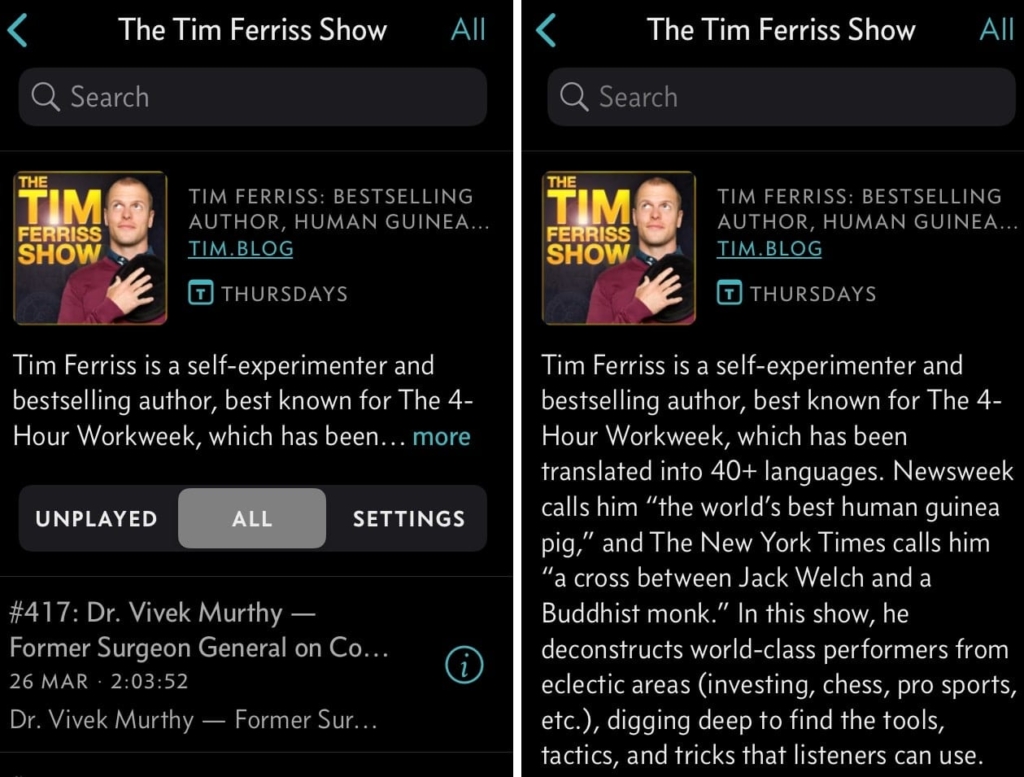
I’ve used screenshots from these podcasts inside Apple Podcasts, Podchaser, Spotify, Overcast, and Podcast Addict. Here, you’ll get an idea of how they actually look – as well as read.
Dan Harris is a fidgety, skeptical ABC newsman who had a panic attack live on Good Morning America, which led him to something he always thought was ridiculous: meditation. He wrote the bestselling book, “10% Happier,” started an app — “10% Happier: Meditation for Fidgety Skeptics” — and now, in this podcast, Dan talks with smart people about whether there’s anything beyond 10%. Basically, here’s what this podcast is obsessed with: Can you be an ambitious person and still strive for enlightenment (whatever that means)? New episodes every Wednesday morning.
Guy Raz dives into the stories behind some of the world’s best known companies. How I Built This weaves a narrative journey about innovators, entrepreneurs and idealists—and the movements they built.
The longest running (and most popular) podcast for non-venture track startups, this show follow the stories of founders as they start, acquire, and grow SaaS companies. Hear when they fail, struggle, succeed, and take you with them through the tumultuous life of an entrepreneur. If you like Mixergy, This Week in Startups, or SaaStr, you’ll enjoy Startup for the Rest of Us.
Tim Ferriss is a self-experimenter and bestselling author, best known for The 4-Hour Workweek, which has been translated into 40+ languages. Newsweek calls him “the world’s best human guinea pig,” and The New York Times calls him “a cross between Jack Welch and a Buddhist monk.” In this show, he deconstructs world-class performers from eclectic areas (investing, chess, pro sports, etc.), digging deep to find the tools, tactics, and tricks that listeners can use.
Podcraft is your weekly, no-nonsense guide to honing the art of podcasting, hosted by veteran creators Colin and Matthew. With over 30 years of combined experience, they cover everything from choosing the right mic to growing your audience and making money from your show. Some episodes dive deep into one topic, like titling episodes or using live events to build your brand, while others feature real-life case studies from podcasters who’ve been there and done it. Whether you’re just starting out or levelling up an existing show, Podcraft gives you the practical advice and honest insights you need to make it work.

You’ll notice that hyperlinks are rare in podcast descriptions. Most listening apps don’t even seem to support them.
Your show summary isn’t the place for links, in any case. It’s the job of this text to tempt people into hitting play. If you want to get them back to your website, then use that as your in-episode Call to Action and add them to your individual episode show notes.
There’s also a separate ‘Website’ field in your media host’s show settings where you can enter a URL. Some listening apps will show this when displaying your podcast. But again, you’re better off keeping listeners on the app so they’ll actually listen!
What Next?
You can only write a great podcast description if you’ve nailed down WHY you’re podcasting, and WHO you’re podcasting for.
For more on this, here are some handy resources.
- How to Start a Podcast: Step-by-Step
- Choosing a Podcast Topic
- Defining Your Podcast Audience
- What Makes Your Podcast Unique?
And if you’re looking for an all-in-one podcast-maker tool to save you time, money, and tech stress, then look no further than Alitu.

Alitu brings everything you need to record, edit, and publish your podcast into one place.
It automatically cleans up your audio and balances levels, offers instant filler-word removal, and allows you to edit audio or video simply by editing the transcript text.
Sound like a fit? Try it free for seven days and see how it works for you.